Ragdoll Playground






About Ragdoll Playground
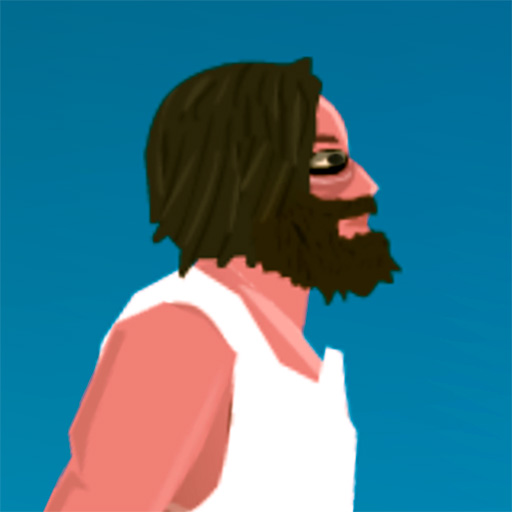
Ragdoll Playground is a sandbox first and a game second. There is no level to clear, no score to chase, no enemy to defeat. You are handed a ragdoll character, a set of tools and objects, and a physics engine, and the rest is up to you. Some people find that freeing. Others bounce off it in five minutes. Both reactions are fair.The appeal is in experimentation. You can drop the ragdoll from heights, place obstacles in its path, spawn vehicles, rig up contraptions, and watch how the physics resolve each situation. Because the body has proper joints and weight, the outcomes are never quite the same twice. Setting up a Rube Goldberg-style chain of events and seeing whether it actually works the way you imagined is most of the fun.
There is a creative-tool mindset at work here. If you like games where you build something and then break it to see what happens, this scratches that itch. If you need a goal or a win condition to stay engaged, the open-endedness will feel empty fast. The game does not push you in any direction, which is either its best or worst feature depending on who is playing.
It runs in the browser and is light enough to leave open in a tab for when you want to mess around for ten minutes. Not a game you finish, a game you poke at.
Ragdoll Playground Beginner's Guide
There are no objectives, so the way you play is whatever you decide to do. Open the tool menu, pick objects or hazards, place them in the scene, and interact with the ragdoll to see how the physics respond.Most of the enjoyment comes from setting up a situation and then testing it — stacking objects, creating chain reactions, dropping the ragdoll into scenarios you design. Experiment with different tools to learn what each one does. There is no wrong way to approach it, and there is no right answer to find.
If you get stuck for ideas, try recreating something simple: a trap, a slide, a falling-object cascade. Building toward a specific outcome is more satisfying than clicking randomly.
Advanced Ragdoll Playground Strategy
Build toward a specific idea. Random clicking gets old fast. Pick something you want to achieve — a trap, a chain reaction, a launch — and engineer toward it.Test in small steps. Add one element, run it, see what happens, then add the next. Big complex setups fail in ways that are hard to debug.
Use weight and height. The physics reward gravity. Dropping objects from higher or stacking heavier items changes how scenarios resolve.
Save your favorite setups mentally. Because outcomes vary, the setups that work well are worth revisiting and tweaking.
Ragdoll Playground Features
- Open sandbox with no set goals or score- A full physics engine that resolves bodies, joints, and objects
- Tools and objects you can place freely to build scenarios
- Emergent outcomes where no two setups behave identically
- Runs in the browser, easy to pick up and put down
All Games


Frequently Asked Questions
What's the goal in Ragdoll Playground?
There are no objectives, so the way you play is whatever you decide to do. Open the tool menu, pick objects or hazards, place them in the scene, and interact with the ragdoll to see how the physics respond. Most of the enjoyment comes from setting up a situation and then testing it — stacking objects, creating chain reactions, dropping the ragdoll into scenarios you design. Experiment with different tools to learn what each one does. There is no wrong way to approach it, and there is no right answer to find. If you get stuck for ideas, try recreating something simple: a trap, a slide, a falling-object cascade. Building toward a specific outcome is more satisfying than clicking randomly.
What are the controls for Ragdoll Playground?
Desktop: Mouse to select, place, and drag objects; keyboard for tool selection and camera. Interaction is direct — you manipulate the scene with the cursor. Mobile: Touch to place and move objects, with on-screen tool buttons.
Can Ragdoll Playground be played on a phone or tablet?
Ragdoll Playground is mobile-friendly. This arcade game adapts to touch on phones and tablets, though players who want precision tend to prefer a desktop setup.
Is Ragdoll Playground completely free?
There's no cost. Ragdoll Playground is supported by ads, so you can play this arcade game without paying or signing up for anything.
How do I get a high score in Ragdoll Playground?
Build toward a specific idea. Random clicking gets old fast. Pick something you want to achieve — a trap, a chain reaction, a launch — and engineer toward it. Test in small steps. Add one element, run it, see what happens, then add the next. Big complex setups fail in ways that a
Is Ragdoll Playground hard to learn?
Beginners can pick up Ragdoll Playground quickly — the controls and goal are clear from the start. The real challenge comes later as the pace picks up and patterns get harder.